Introduction
If you’ve ever spent twenty minutes searching for an insurance policy, forgotten when your car MOT is due or wondered where on earth you saved your latest utility bill, you’re not alone.
Home admin isn’t exciting, but it’s one of those jobs that quietly keeps life running smoothly.
When I talk about home admin, I mean everything involved in managing your home and everyday life. Things like:
- Utility bills
- Insurance
- Bank accounts
- Mortgage or rent
- Healthcare information
- Vehicle documents
- School paperwork
- Pet records
- Household maintenance
- Important contacts
The problem isn’t just the paperwork.
It’s the mental load of trying to remember where everything is and when everything needs doing.
As a Professional Declutterer & Organiser, I regularly meet people whose homes are reasonably tidy, but whose paperwork and digital files are causing them constant stress.
The good news? It doesn’t have to be complicated.
Start With One Simple Question
Ask yourself: “Would I know where to find this in an emergency?”
If the answer is no, it probably needs a proper home.
The aim isn’t to keep everything.
It’s to keep the right information, in a place where you can find it quickly.
What Paperwork Should You Keep?
One of the biggest misconceptions is that you need years’ worth of paperwork.
For most households, you don’t.
Bank Accounts
Keep:
- The account opening letter (if you still have it)
- Your latest statement
Why?
Some identity checks ask when your account was opened, and your latest statement contains your account number and current details.
Utility Bills
You usually only need:
- Your current contract (if applicable)
- Your latest bill or statement
This gives you all the info you need, such as the account number, contact details, current tariff and payment information.
Older bills can usually be downloaded if ever required.
Insurance
Keep your latest policy documents for all insurances e.g. home, car, travel, life, pet, etc.
Once a policy has expired and you’re happy you no longer need it, there’s rarely a reason to keep old policy paperwork.
Mortgage or Rent
Keep:
- Current mortgage documents
- Latest mortgage statement
or
- Current tenancy agreement
Vehicles
Useful documents include:
- V5C logbook
- Current insurance
- MOT information
- Service history
- Breakdown cover
Tip: Put your vehicle insurance contact number in your phone as a contact. Name it ‘Car Insurance’ in case you can’t remember the provider and ensure its updated when the car insurance is renewed. Don’t forget to do the same with Breakdown cover.
Healthcare
Keep details of:
- GP surgery
- Dentist
- Optician
- NHS numbers
- Current prescriptions
These don’t need to be piles of paperwork, just accurate information that’s easy to access.
How to Organise Paperwork
My filing system is incredibly simple.
I use labelled folders with dividers for broad categories such as:
Finances | Cars | House Utilities | House Documents | Medical | Pensions | Work Info
Within each folder are smaller labelled sections. For example, in the medical file I have a divider for each of my family.
The secret? Only keep what you actually need.
A slimmer filing system is far easier to maintain than an overflowing filing cabinet full of paperwork you’ll never look at again.
Going Paperless
Many companies now encourage paperless billing.
While this reduces clutter, it creates a new challenge.
Important information becomes spread across emails, apps and customer portals.
That’s why I recommend creating a shared digital filing system.
How to Organise Digital Home Admin
Whether you use Google Drive, Dropbox, OneDrive or iCloud, create folders that mirror your paper filing system.
Rename documents consistently.
Instead of: Document(4).pdf
Try: Home Insurance – ABC Insurance – Jan 2026
You’ll thank yourself later.
Don’t Store Passwords
It’s fine to keep account numbers and provider details together.
However, avoid storing passwords in the same document.
Instead, use a reputable password manager or another secure method.
Keep Important Dates Together
One of the biggest causes of household stress is forgetting important dates until it’s too late.
Think about:
- Insurance renewals
- Utility contracts
- Vehicle tax & MOT
- Tax returns
- Birthdays
- School events
- Medical appointments
Rather than relying on memory, record everything in one place and review it regularly.
I recommend checking your upcoming month around the 15th of each month. That gives you plenty of time to book appointments, compare prices and avoid unnecessary stress.

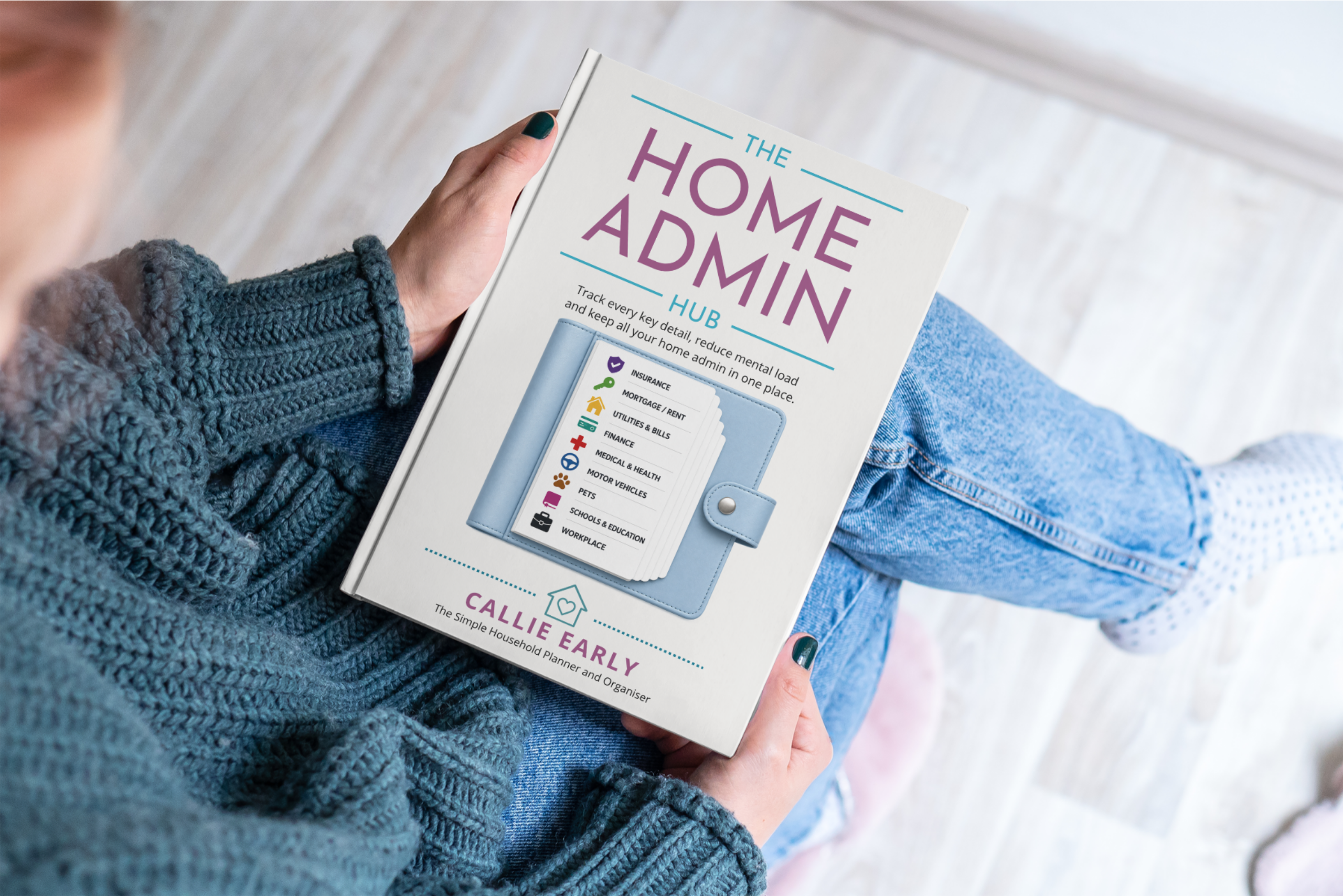
Why I Created The Home Admin Hub
Over the years, I realised that while paperwork had become increasingly digital, the amount of information we needed to manage had only grown.
Like many households, I found I was carrying much of that information in my head.
That inspired me to create The Home Admin Hub – a household planner and organiser designed to keep all your important home admin together in one trusted place.
It’s designed to reduce mental load, save time and make it easier for everyone in the household to access important information.
Because important information shouldn’t live in just one person’s head.

Free Resources to Help You Get Started
If you’re not quite ready for the full planner, I’ve created several free downloads to help you get organised.
These include:
- Year at a Glance Planner
- Utility & Household Bills Renewal Tracker
They’re simple tools designed to help you stay ahead of important dates, avoid costly auto-renewals and feel more in control of your household admin.
Need Some Help?
Sometimes the hardest part is knowing where to begin.
If your paperwork feels overwhelming, I offer in-home decluttering and organising sessions to help create practical systems that work for you, not picture-perfect filing systems that fall apart after a week.
I also offer free household bill reviews, helping you identify opportunities to reduce your regular outgoings. There’s absolutely no obligation to switch providers or sign up to anything. My aim is simply to help you save money wherever possible.
Small changes really do make a big difference.
Start with one folder.
One drawer.
One reminder.
One system.
Future you will be very grateful.